
Fire alarm repair in London
Panel in fault, or the same false alarm every week? We find the cause, not just the symptom.
Free survey and a written quote, with a reply within 24 to 48 hours.
- Fault finding · diagnosis · repair
- BAFE SP203-1 (fire alarms)
- Fike registered
- C-TEC certified
Book an engineer
Step 1 of 3Four questions. Free survey, free written quote, no obligation.
Request received
Thanks, we'll call you within 24 to 48 hours to arrange your free survey.
- Service
- We'll call
What happens next
- An engineer calls you to arrange a time, within 24 to 48 hours.
- We survey the building free of charge and put the price in writing.
- You decide once you have the quote. No obligation either way.
Need us sooner? Call 020 3393 1661Mon to Fri 9am–7pm · Sat 10am–3pm



What a repair visit actually involves
Most fire alarm faults are not mysterious. They are a short list of causes that need eliminating in order, which is slower than guessing and far cheaper than replacing the wrong part twice.
-
Diagnosis first
We read the panel event log before touching a device. The pattern over weeks tells you more than the fault showing today.
-
Repaired, not masked
Silencing a panel clears the noise and leaves the building unprotected. We fix the cause or tell you plainly that we cannot.
-
Repeat false alarms
An alarm that cries wolf gets ignored, which is the real danger. We trace why it is triggering and change the design if that is the answer.
-
Written up
What was wrong, what was done and what is still outstanding, recorded so your logbook shows the fault was dealt with.
Why the panel is in fault
A fault light means the panel has lost confidence in part of itself. In practice the cause is nearly always one of a handful of things: a detector that has drifted out of tolerance or filled with dust, an open or short circuit on a detection loop, a standby battery that no longer holds charge under load, a missing or failed end-of-line device on a conventional zone, or a mains supply problem the panel is riding out on batteries.
None of those are guesswork to find. They are eliminated in order with a meter and the panel’s own diagnostics, which is why an engineer who knows the panel finds in an hour what a general electrician can spend a day on.
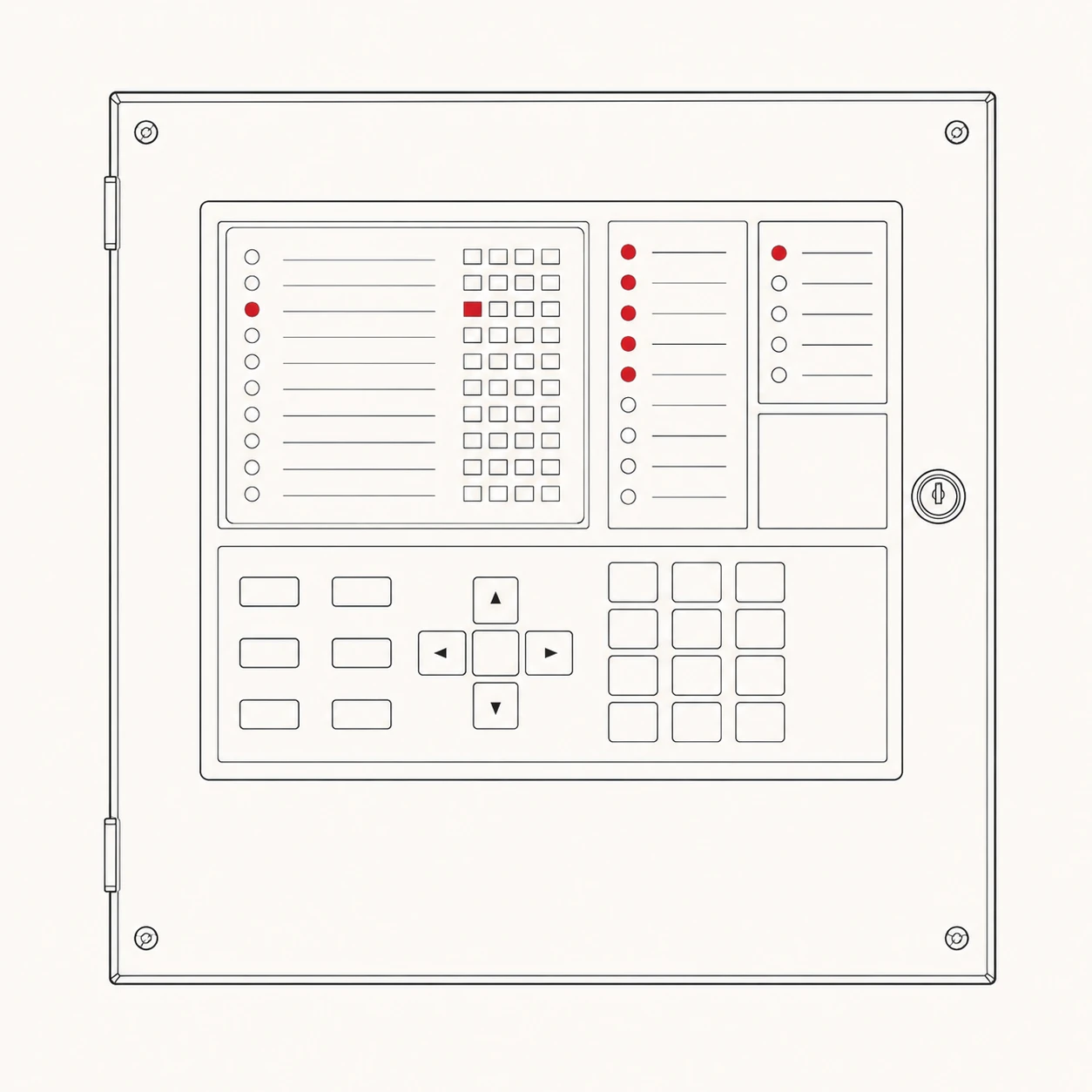
Direct answer: a beeping panel with a yellow light is a fault warning, not a fire signal. It means the system may not work if a real fire starts. Silencing it removes the noise and none of the risk, so it needs diagnosing rather than muting.
What we repair
- Panel faults: loop, zone, earth, mains and charger faults on the control equipment itself.
- Detector faults: contaminated, drifted or failed detectors, and heads reporting on the wrong address.
- Cabling faults: open circuits, short circuits and the intermittent ones that clear before you arrive.
- Battery and supply: standby batteries that no longer carry the system through a mains failure.
- Sounder and beacon circuits: devices that do not operate, or operate at the wrong volume for the space.
- Repeat unwanted alarms: tracing what is actually triggering the system, and changing the detection if the design is the cause.
Unwanted alarms are a design problem more often than a fault
When the same detector keeps going off, replacing it usually buys a few weeks. The question worth asking is why a detector is there at all in a place where steam, dust, aerosols or cooking fumes reach it. BS 5839-1 covers the choice of detector type for exactly this reason: an optical smoke detector in a corridor outside a shower room will keep responding to steam because that is what it is built to do. A heat detector in the same position will not.
So the fix is sometimes a different detector, sometimes a different position, and sometimes a different category of system altogether. That is a design conversation, not a repair, and we would rather have it once than send an engineer out every month.
What the law asks of you
Under the Regulatory Reform (Fire Safety) Order 2005 the Responsible Person must keep fire safety equipment in efficient working order and in good repair. A system standing in fault is not in efficient working order, and the duty does not pause while you decide what to do about it.
The Order sets no deadline in hours, which is often misread as leniency. It is the opposite: the obligation is continuous, so what creates exposure is the period a known fault is left alone, not the fault occurring in the first place. Faults happen on well-maintained systems too. Recording the fault, the date and what was done about it is what demonstrates you met the duty.
When repair stops making sense
Some systems reach a point where repair is the wrong answer: obsolete panels with no parts available, detection that has been extended piecemeal until no drawing matches the building, or a system installed to a category that no longer suits how the premises are used. We will tell you when you are there, and what replacement would involve, rather than returning for the same fault.
If you are unhappy with the company currently looking after the system, the ordinary route is a takeover rather than a repair, which begins with an inspection of what you actually have.
How a fault call runs
Four steps, and the first two happen before anyone opens a device.
-
01
Tell us what the panel says
The zone or device number and the wording on the display narrow it down enormously before an engineer leaves. Photograph the panel if that is easier than reading it out.
-
02
The event log comes first
The log shows the pattern over weeks, not just the fault standing today. An intermittent cause is invisible in a single visit and obvious in a log.
-
03
Eliminated in order
Supply, batteries, loop continuity, then devices. Slower than guessing, and it avoids replacing the wrong part twice.
-
04
Fixed and written up
What was wrong, what was done, and anything still outstanding, recorded for your logbook so the fault and its resolution are both evidenced.
Why there is no price on this page
Every other service on this site carries a calculator, because those prices follow something you can count: devices, light fittings, extinguishers, doors. A fault is not countable until it is found.
We could publish a call-out figure and a hopeful hourly rate. We would rather tell you what actually drives the cost: how long the cause takes to isolate, whether the part is still manufactured, and whether the work can be done in normal hours. Call and describe what the panel is showing and we will give you an honest range on the phone, including when we think replacement beats repair.
Fire alarm faults: the questions we get asked
My fire alarm panel is beeping. What does that mean?
A steady or intermittent beep with a yellow indicator is almost always a fault warning, not a fire signal. The panel is telling you it has lost confidence in part of the system: a device, a cable, the mains supply or the standby batteries. It is not an evacuation signal, but it does mean the system may not do its job if a real fire starts, so it needs investigating rather than silencing and forgetting.
What is the difference between a fault and a false alarm?
A fault is the system reporting that something is wrong with itself. A false alarm, or unwanted alarm, is the system correctly doing what it was told to do in response to something that was not a fire: steam from a shower room, dust from building work, an aerosol, a contaminated detector, or a call point knocked by a trolley. They are different problems with different fixes, and treating one as the other is why some buildings never stop having them.
Can you repair a system you did not install?
Yes. We are BAFE SP203-1 registered for fire detection and alarm systems and we work on other companies’ installations regularly, including Fike and C-TEC panels, for which we are registered and certified respectively. If the system turns out to be beyond economic repair we will say so plainly and set out what replacing it would involve, rather than charging for repeated visits to something that has reached the end of its life.
Do I have to fix a fault, legally?
The Regulatory Reform (Fire Safety) Order 2005 requires the Responsible Person to keep fire safety equipment in efficient working order and in good repair. A system sitting in fault is not in efficient working order. The Order does not set a deadline in hours, but the duty is continuous, so leaving a known fault unattended is the part that creates exposure rather than the fault itself.
What if the fault keeps coming back?
A fault that returns is usually a symptom rather than the problem. Intermittent cable faults, a detector on the edge of contamination, and a battery that only fails under load all clear themselves and come back. That is why the panel event log matters: it shows the pattern over weeks, which a single visit cannot. We read the log before we start replacing parts.
Once it is working again
A repair puts the system back. Keeping it there is a servicing question.
Fire alarm installation
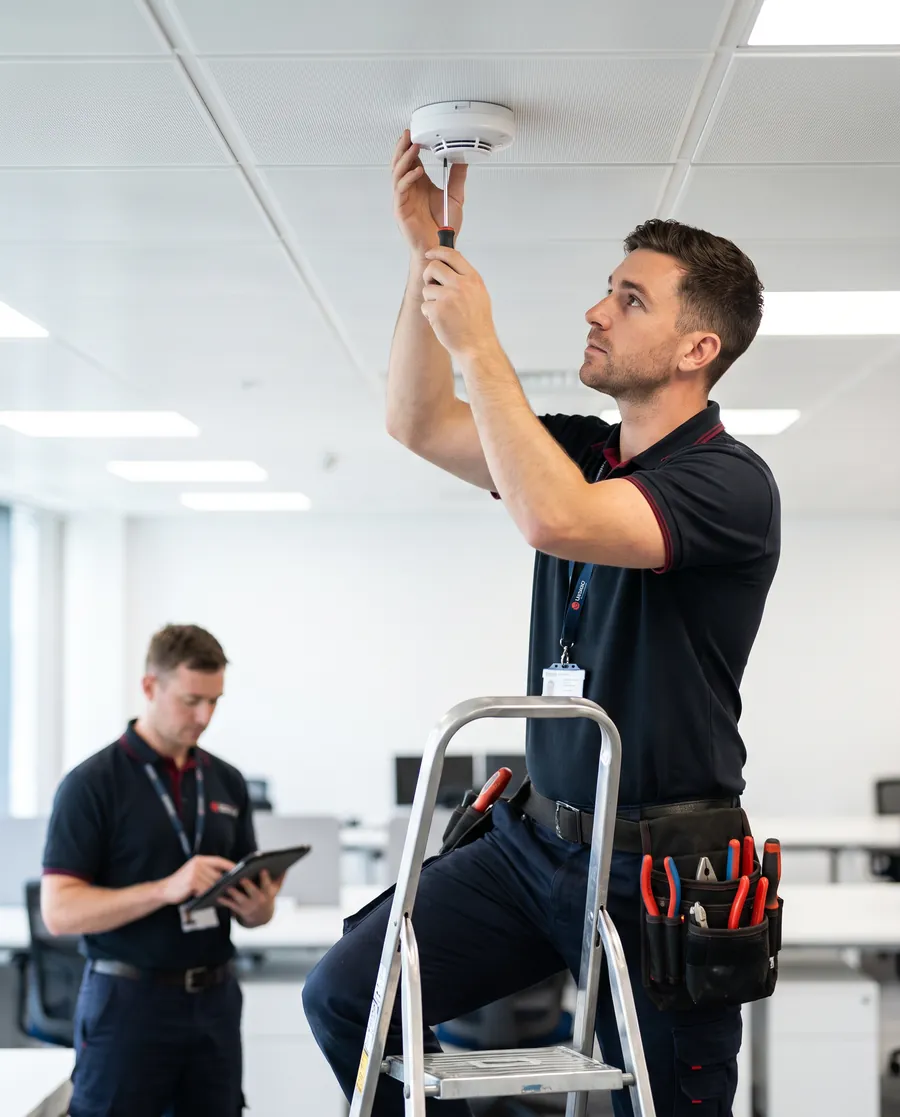
Addressable and conventional systems designed, installed and commissioned to BS 5839-1, with certification on completion.
Fire alarm installation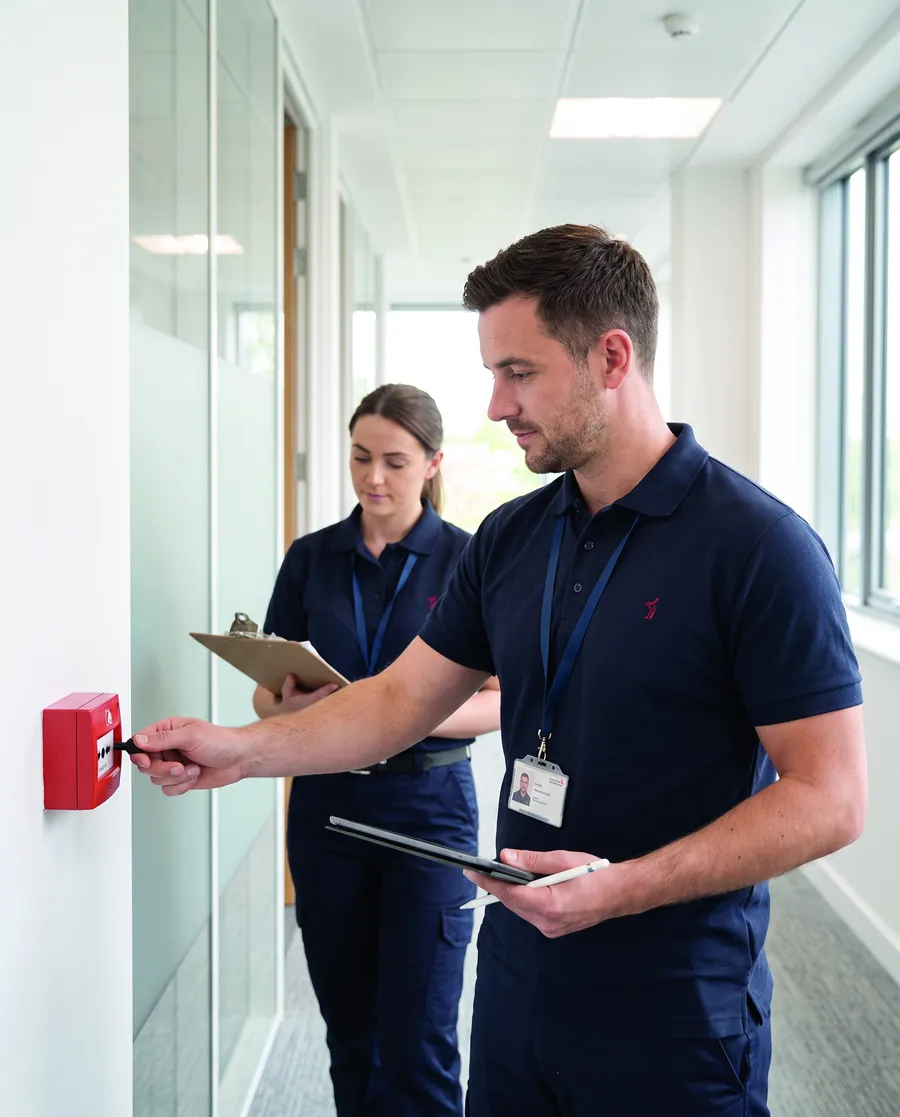
Maintenance & servicing
Six-monthly inspection by BAFE-certified technicians, with a certificate after every visit.
Maintenance & servicing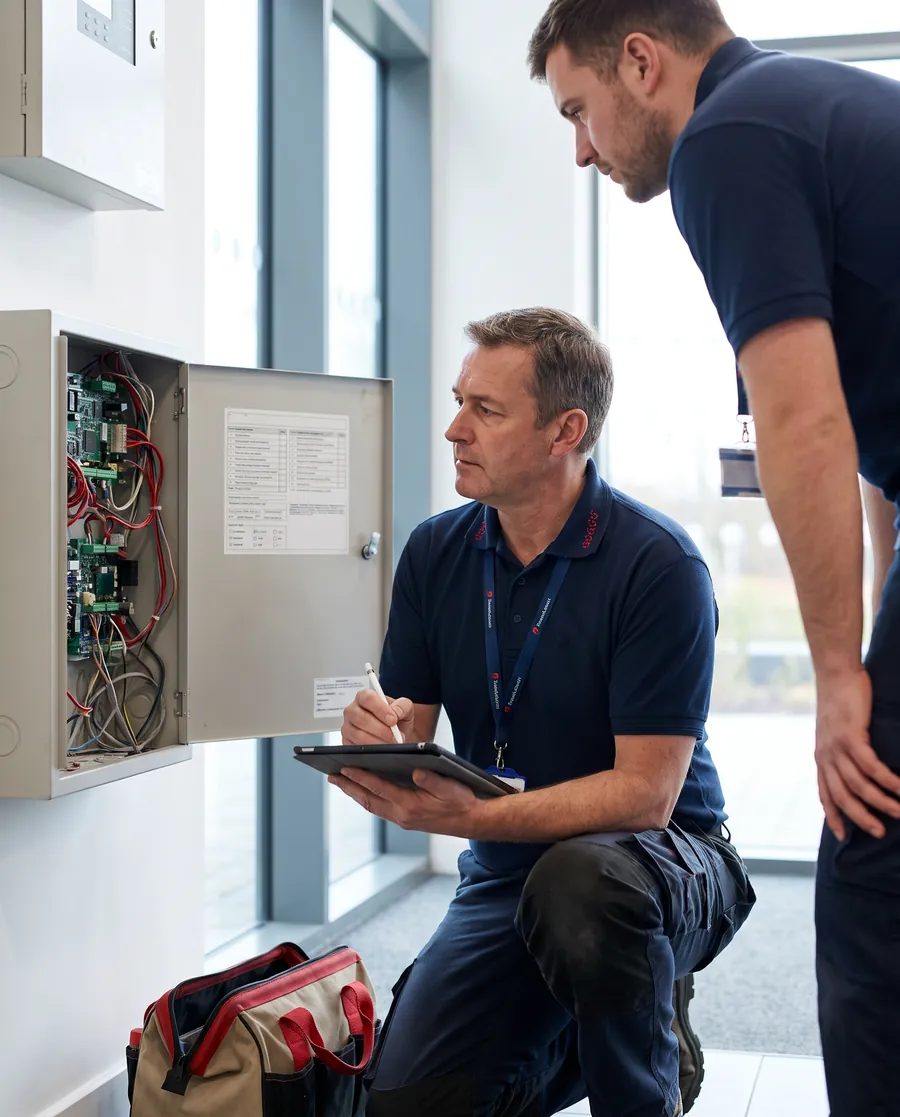
System takeover
Switch provider with no gap in cover. We audit your existing system free of charge before you commit.
Free takeover auditWhere this comes from
- BS 5839-1, fire detection and alarm systems in non-domestic premisesBSI
- Regulatory Reform (Fire Safety) Order 2005legislation.gov.uk
- BAFE, the third-party certification body for scheme SP203-1bafe.org.uk
We name the standard rather than quoting it. British Standards are copyright of BSI and have to be bought from them; the links above are to the publisher so you can check any figure on this page against the source.
Free survey · No obligation
Panel showing a fault right now?
Tell us what the display says and we will tell you what it means. We reply to every enquiry within 24 to 48 hours, and the survey is free.
- BAFE SP203-1 registered for fire alarms, Fike and C-TEC certified
- Written quote before any work starts
- Called back within 24 to 48 hours