
Fire safety for London restaurants and takeaways
The kitchen is the highest fire load in the building and the reason your alarm keeps going off. Those two facts are related, and the fix is design rather than an isolated zone.
Free survey and a written quote, with a reply within 24 to 48 hours.
- BS 5839-1 · kitchens, cellars and late trading
- BAFE SP203-1 (fire alarms)
- Fike registered
- C-TEC certified
Book a free kitchen survey
Step 1 of 3Four questions. Free survey, free written quote, no obligation.
Request received
Thanks, we'll call you within 24 to 48 hours to arrange your free survey.
- Service
- We'll call
What happens next
- An engineer calls you to arrange a time, within 24 to 48 hours.
- We survey the building free of charge and put the price in writing.
- You decide once you have the quote. No obligation either way.
Need us sooner? Call 020 3393 1661Mon to Fri 9am–7pm · Sat 10am–3pm



What a kitchen changes about the job
Everything on this page comes back to one room. Get that room right and the rest of a restaurant is ordinary work.
-
The false alarms stop without losing coverage
Heat detection in the cooking area, smoke everywhere else. Steam and grease stop reading as smoke, and the room with the most fire load in it stays detected.
-
Wet chemical where there is hot oil
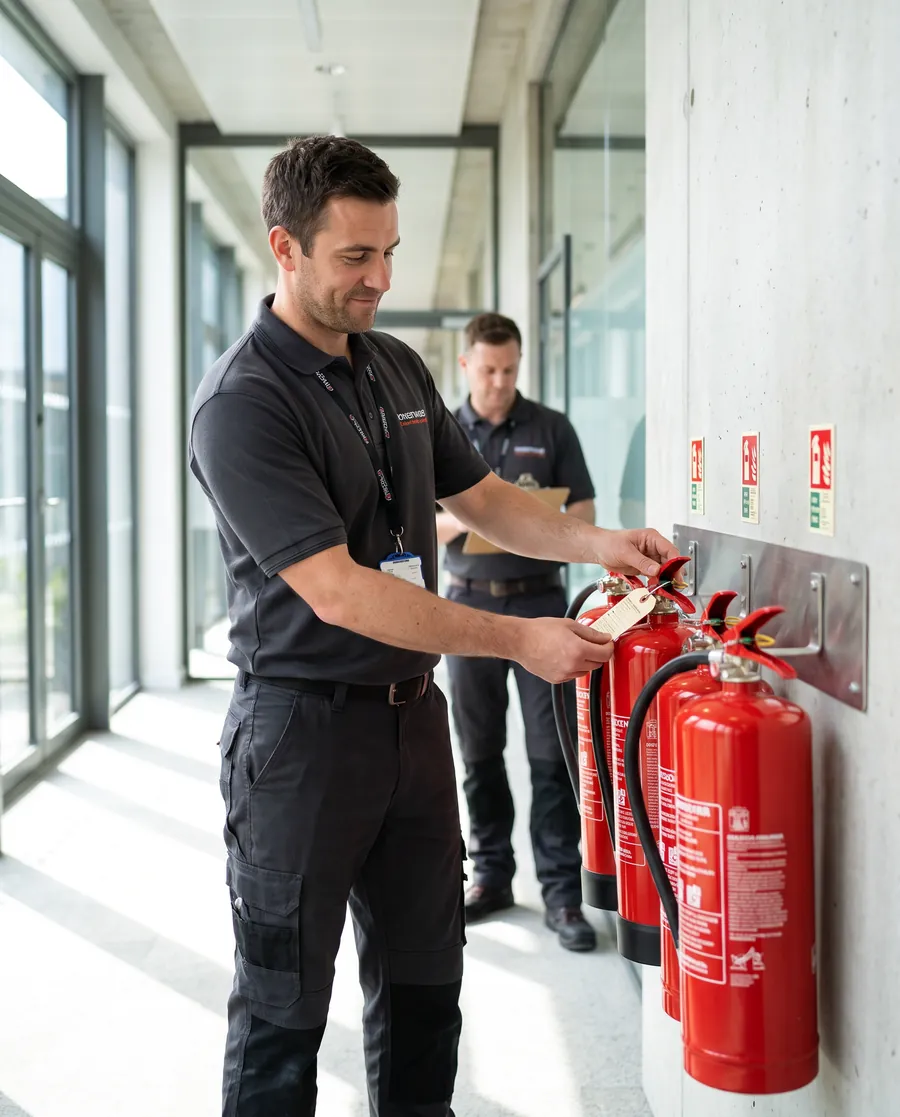
Class F cover on the fryer and the range, selected and sited to BS 5306-8. We take out the water extinguisher somebody hung next to it.
-
The cellar and the single stair
A basement under the only way out is the worst geometry in the building, and it is usually the cheapest part of the job to put right.
-
Escape lighting built for closing time
Unfamiliar customers, unlit steps, one in the morning. Tested to full duration annually, which is the test that actually proves the battery.
Why the kitchen zone is isolated on so many panels
Read the event log on a restaurant panel and the pattern is nearly always the same. A run of unwanted activations from the same detector between six and nine in the evening, a call-out, and then nothing at all from that zone ever again, because somebody isolated it and the isolation was never lifted.
That is understandable and it is the wrong repair. The cause is that an optical smoke detector reads scattered light, and steam off a pass and aerosolised grease scatter light almost exactly the way smoke does. The detector is not faulty. It is doing what it was designed to do in a room it was never the right device for.
The correct answer is heat detection in the cooking area itself, sited clear of the extract, with smoke detection retained everywhere else. Sometimes a multi-sensor with a verification delay on the panel is the better fit. Either way the coverage the fire risk assessment asked for stays intact, which an isolated zone does not.
How the detection is split
- Cooking area
- Heat detection, clear of the canopy draw. Ignores steam and grease aerosol.
- Pass and servery
- Multi-sensor, sometimes with a short verification delay at the panel.
- Front of house, cellar, stairs
- Ordinary smoke detection. Nothing about the kitchen changes these.
- The panel log
- Read first, every visit. It says what actually happens at 7pm better than any walk-round.
The four things we take out of a restaurant
None of these are unusual. All four turn up in most kitchens we survey for the first time.
- The isolated kitchen zone Heat detection in the cooking area so the zone can be put back into service and stay there. Coverage restored A zone switched out after an evening call-out months ago, leaving the highest fire load in the building undetected.
- The wrong extinguisher Wet chemical for Class F, sited to BS 5306-8, with the water unit moved away from the fryer. Class F A water or foam extinguisher within reach of hot oil, which turns a pan fire into a room fire.
- The propped fire door A hold-open device linked to the alarm, so it stays open during service and closes on activation. Linked to the panel The kitchen-to-corridor door wedged for airflow, which is the compartment line the whole strategy assumes is closed.
- Extract ductwork Named in the assessment, cleaned to TR/19 Grease, certificates kept for the insurer. Insurer condition Grease accumulating in a duct that runs through the building, and no record of it ever being cleaned.
TR/19 Grease is a BESA specification, not legislation. BAFE SP203-1 covers our fire detection and alarm work; extinguishers are worked to BS 5306 and are outside that scheme.
- Heat detection in the cooking area, smoke retained everywhere else
- Panel log read and every isolation accounted for
- Wet chemical cover for fryers and ranges, sited to BS 5306-8
- Kitchen fire door on a linked hold-open rather than a wedge
- Cellar and any single-stair basement detected
- Escape lighting covering external steps and the yard, tested to full duration annually
- Extract ductwork named in the fire risk assessment with cleaning records kept
- Enough trained staff on the latest shift, not the busiest one
How a restaurant survey runs
We read the panel before we look at the kitchen, because the log tells us what actually happens during service.
-
01
The panel log
Every activation and every isolation, with dates. Ten minutes here explains most of what is wrong.
-
02
The kitchen at eye level and at ceiling level
Where the steam goes, where the extract draws, and where the current detectors sit relative to both.
-
03
The route out at closing time
Walked as a customer would, in the dark, including the external steps and the yard.
-
04
A written position
What is required, what is a design change rather than new equipment, and what is already fine.
What restaurant and takeaway owners ask us
Our kitchen sets the alarm off constantly. What is actually wrong?
Almost always the detector type, not the detector. An optical smoke detector works by reading scattered light, and steam and airborne grease scatter light in very much the same way smoke does, so from the detector’s point of view a busy service and a fire look similar. The normal answer in a cooking area is heat detection, which ignores both, with the surrounding areas kept on smoke detection as usual. That is a design decision under BS 5839-1 rather than a relaxation of it. What is not an answer is isolating the kitchen zone, which is what we find on the panel log more often than anything else, and which leaves the room with the highest fire load in the building undetected.
Which extinguisher goes next to the fryer?
A wet chemical extinguisher, and it is worth knowing why rather than just where. Burning cooking oil is a Class F fire, and wet chemical works by reacting with the hot oil to form a soapy crust that seals the surface and cools it. Water and foam do not do that: they sink into oil that is far above the boiling point of water, flash to steam and throw burning oil out of the pan. A CO2 extinguisher, which people reach for because it is the electrical one, blasts the surface and can spread it. Selection and siting come from BS 5306-8 and the annual service from BS 5306-3.
Do we have to have the extract ductwork cleaned?
There is no statute that names a cleaning interval, but the duct is a real fire spread path and it will feature in your fire risk assessment, so leaving it is not a neutral choice. The industry specification is TR/19 Grease, published by BESA, which sets out how the work is done and how the result is verified and recorded. Most insurers now attach a condition requiring documented cleaning at a stated frequency, and that is a policy term rather than a legal one, which matters because breaching it affects a claim rather than triggering enforcement. Either way, keep the certificates.
We are open until 1am. Does that change anything?
It changes the emergency lighting and it changes the drill. A restaurant that empties at eleven has customers on unfamiliar stairs in the dark if the power goes, so the escape lighting has to cover the route including any external steps or yard the exit discharges into, and the annual full-duration test matters more here than almost anywhere. Late trading also usually means alcohol, a public who are less alert, and a skeleton team, so the number of staff who can actually run an evacuation at midnight is the number that counts, not the number on the lunchtime shift.
The cellar is only used for storage. Does it need covering?
Yes, and cellars are a recurring problem in London restaurants because so many of them are single-stair basements under a Victorian building. A fire below the only way out is the worst geometry there is, the space is unoccupied for hours at a time so nobody smells anything, and cellars accumulate exactly the wrong things: cardboard, spirits, a chest freezer and an extension lead. Detection down there is usually not the expensive part of the job and it is close to the most useful.
Where this comes from
- BS 5839-1, fire detection and alarm systems in non-domestic premisesBSI
- BS 5306-3, commissioning and maintenance of portable fire extinguishersBSI
- BAFE, the third-party certification body for scheme SP203-1bafe.org.uk
We name the standard rather than quoting it. British Standards are copyright of BSI and have to be bought from them; the links above are to the publisher so you can check any figure on this page against the source.
Free survey · No obligation
If a zone is isolated, that is where we start
Tell us what the panel is doing and we will tell you whether it is a detector, a design fault or a genuine problem. The survey and the written quote are both free.
- BAFE SP203-1 registered for fire alarms, Fike and C-TEC certified
- Written quote before any work starts
- Called back within 24 to 48 hours