
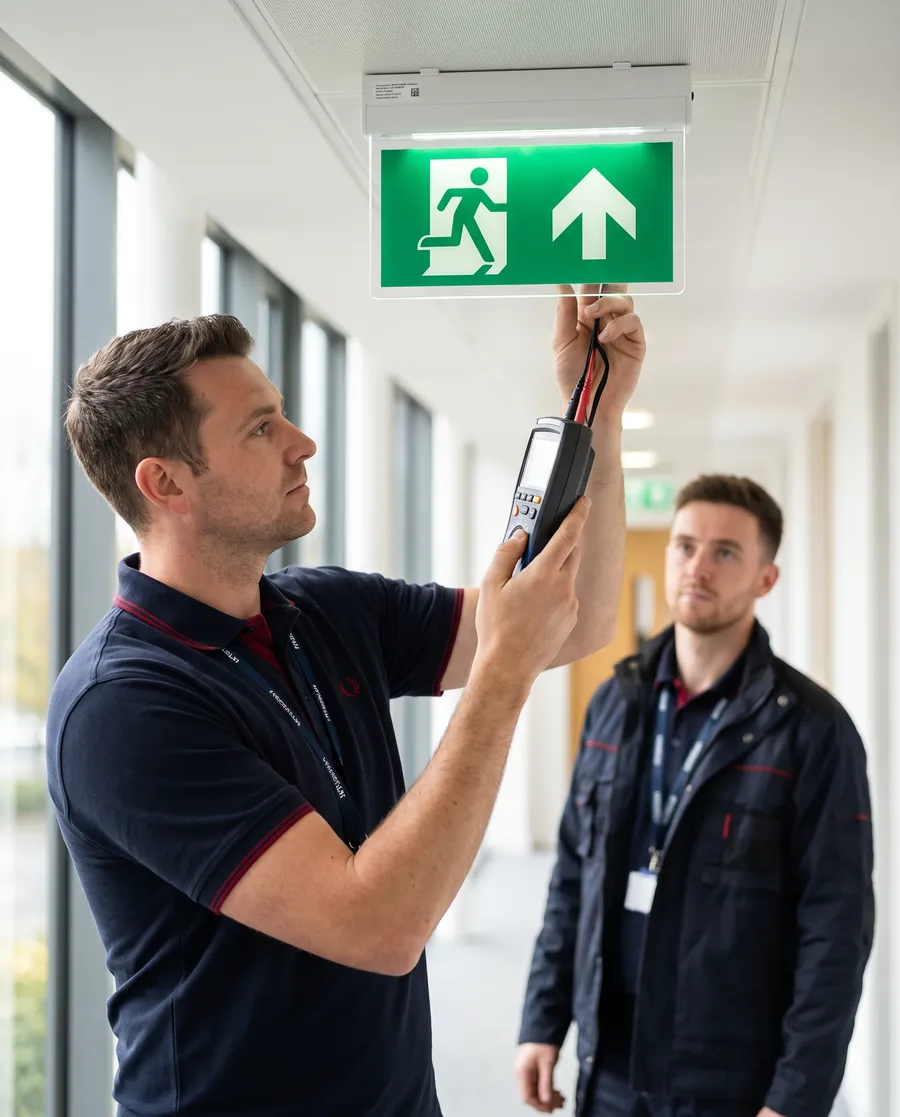
Emergency lighting in London
Escape routes stay visible when the mains fails. Installed and certified to BS 5266-1.
Free survey and a written quote, or call 020 3393 1661. We reply within 24 to 48 hours.
- BS 5266-1
- BAFE SP203-1 (fire alarms)
- Fike registered
- C-TEC certified
Book your free survey
Step 1 of 3Four questions. Free survey, free written quote, no obligation.
Request received
Thanks, we'll call you within 24 to 48 hours to arrange your free survey.
- Service
- We'll call
What happens next
- An engineer calls you to arrange a time, within 24 to 48 hours.
- We survey the building free of charge and put the price in writing.
- You decide once you have the quote. No obligation either way.
Need us sooner? Call 020 3393 1661Mon to Fri 9am–7pm · Sat 10am–3pm



Escape routes that stay lit
When the mains fails, people have to see the way out. BS 5266-1 sets how that is designed, tested and recorded.
-
Designed to BS 5266-1
Coverage of escape routes, stairs, changes of level, call points and firefighting equipment, worked out properly.
-
Monthly and annual testing
The short functional test and the full three-hour duration test, recorded in your log book.
-
Repairs and replacements
Failed batteries, dead fittings and missing signage sorted on the same visit wherever we can.
-
One team with the alarm
Lighting and alarm certified by the same accredited company, so nothing falls between two suppliers.
Why does your building need emergency lighting?
When a fire cuts the power, people still need to find their way out. Emergency lighting illuminates escape routes, exits and key safety equipment automatically on mains failure. The Fire Safety Order 2005 requires escape routes to remain usable, and your fire risk assessment will normally call for emergency lighting wherever darkness would put people at risk. It is designed and maintained to BS 5266-1.
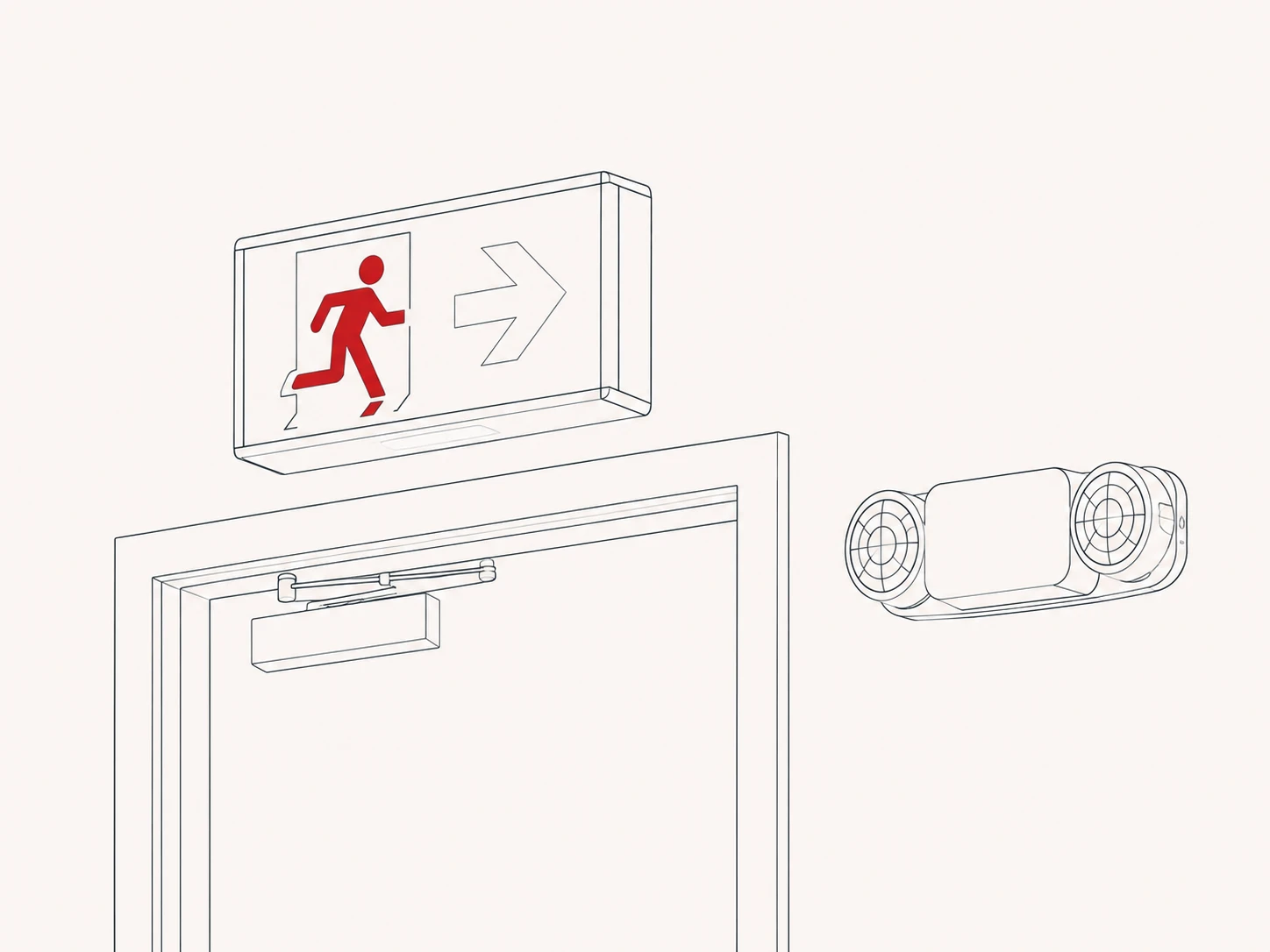
Direct answer: emergency lighting switches on automatically when the mains power fails, keeping escape routes and exits visible so people can leave safely. In most commercial premises it is required by the fire risk assessment and installed to BS 5266-1.
What we provide
- Design and installation to BS 5266-1, with the right mix of maintained and non-maintained fittings for each area.
- Annual full-duration testing, confirming every fitting holds its rated duration, usually three hours.
- Fault repair, from failed batteries and lamps to fittings that will not hold charge.
- Certification and log book, so you have the records an inspector or insurer will ask for.
How often must it be tested?
BS 5266-1 expects a brief monthly function test, which your staff can carry out, and a full-duration test once a year, which we complete and certificate. We record the results in your log book and flag any fitting that needs replacing. All our services support compliance with insurance policies.
Since 31 October 2025 there is a third interval. BS 5266-1:2025 replaced the 2016 edition and asks for a photometric verification at least every five years, a measured check, with calibrated equipment, that the light levels in the building still match what was designed. It is new, most owners have not heard of it, and it catches the drift that a function test never could. Our guide to how often emergency lighting must be tested sets out all three intervals and who can carry out each one.
What annual testing costs
Emergency lighting is priced on the number of fittings tested. The figure covers the annual full-duration test and the certificate that goes with it.
-
Annual full-duration testing to BS 5266-1, with the certificate.
fittings
What moves a fire safety price, and where the money actually goes
Emergency lighting that would actually work
Both jobs get called the same thing on the invoice. This is what actually differs.
- Design Escape routes, stairs, level changes and equipment covered to the standard BS 5266-1 Fittings placed where the wiring was easy
- Testing Monthly function test and the full three-hour duration test, recorded Three hours A quick flick of the test key once a year
- Batteries Failures reported and replaced, not just noted Replaced Failed batteries found at the next inspection
- Records Certificate and log book, ready for an inspector Evidenced No log, so the duty is impossible to evidence
How it works
Four steps, the price agreed in writing before anyone starts, and one accredited team from survey to certificate.
-
01
Free survey
We check what is installed, what is failing and what the escape routes actually need.
-
02
Written quote
Fittings, positions and price in writing, with no obligation.
-
03
Install and test
Installed and commissioned, then duration-tested to prove the three hours.
-
04
Certificate and schedule
Certificate issued, log book set up, and annual testing scheduled.
Emergency lighting: your questions answered
Is emergency lighting a legal requirement?
In most commercial buildings, yes. The Fire Safety Order 2005 requires escape routes and exits to be usable at all times, and your fire risk assessment will usually identify emergency lighting as necessary wherever a mains failure would leave escape routes dark. Emergency lighting is installed and maintained to BS 5266-1.
How often should emergency lighting be tested?
BS 5266-1 sets out a short monthly function test and a full-duration test once a year, where the lighting must stay lit for its rated duration, usually three hours. Results are recorded in a log book. We carry out the annual test and certification, and show your staff how to do the monthly checks.
What is the difference between maintained and non-maintained emergency lighting?
Maintained fittings are lit all the time and stay on when the power fails, common in places like cinemas and function rooms. Non-maintained fittings are off in normal use and only illuminate on mains failure, common in offices and corridors. Your assessment and the building use decide which is appropriate where.
Can you fix a failed emergency light?
Yes. We install new systems, service existing ones, and repair faults such as failed batteries, failed lamps or fittings that will not hold their duration. After a repair or service we test the system and issue a certificate for your records.
Services that go with emergency lighting
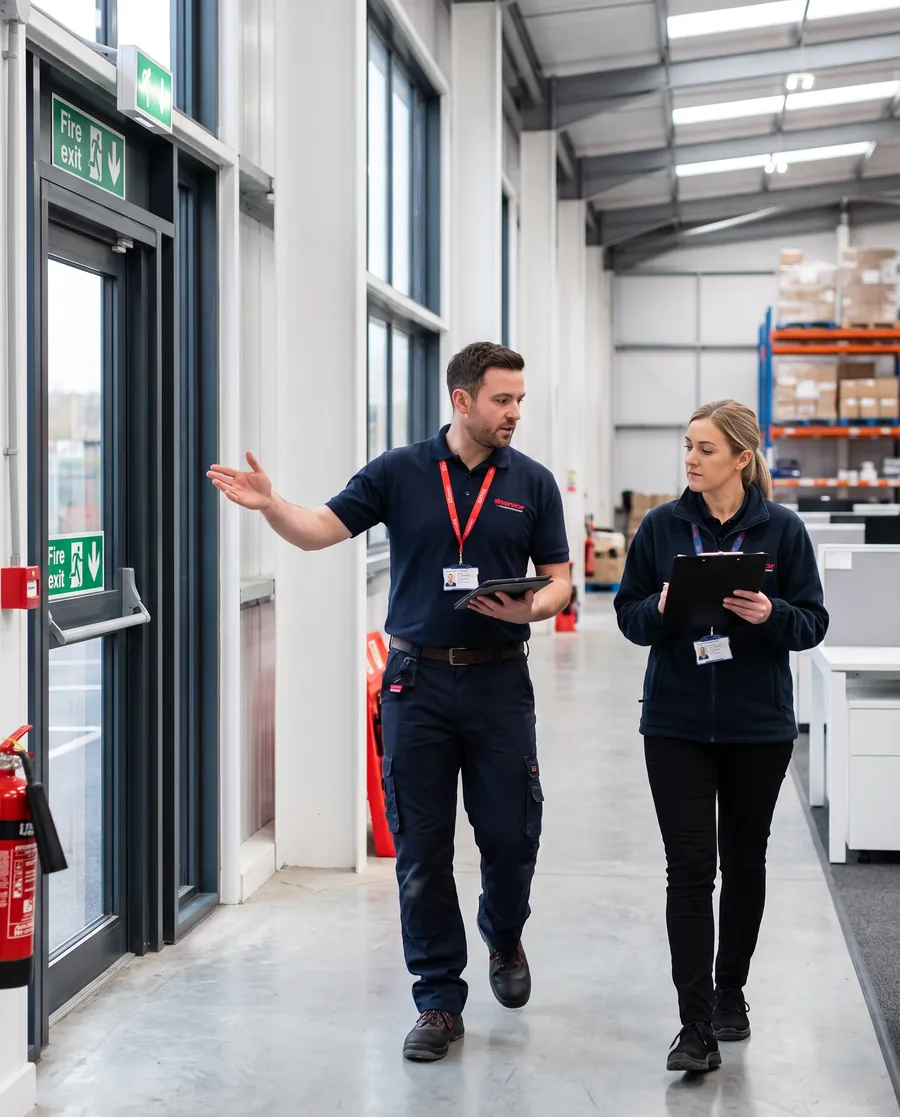
Fire risk assessment
The legal starting point under the Fire Safety Order 2005, by a team that can also fix what it finds.
Fire risk assessment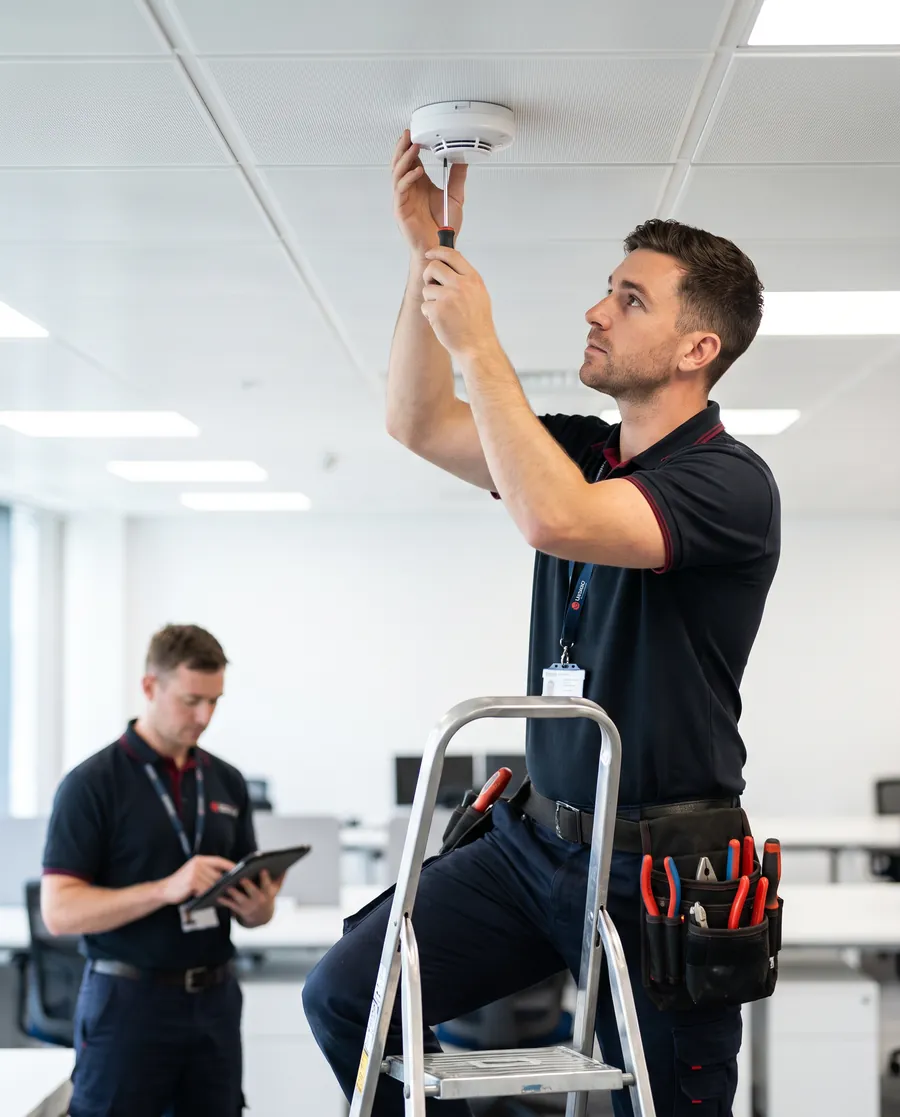
Fire alarm installation
Addressable and conventional systems designed, installed and commissioned to BS 5839-1, with certification on completion.
Fire alarm installation
Fire doors, signage & training
Fire door verification, fire safety signage and staff training so your whole building stays compliant.
Fire doors & trainingWhere this comes from
- BS 5839-1, fire detection and alarm systems in non-domestic premisesBSI
- BS 5266-1, emergency lighting code of practiceBSI
- Regulatory Reform (Fire Safety) Order 2005legislation.gov.uk
- BAFE, the third-party certification body for scheme SP203-1bafe.org.uk
We name the standard rather than quoting it. British Standards are copyright of BSI and have to be bought from them; the links above are to the publisher so you can check any figure on this page against the source.
Free survey · No obligation
Book emergency lighting work
New installation, annual testing or a fault to fix. Book a free survey and we will confirm what your building needs.
- BAFE SP203-1 registered for fire alarms, Fike and C-TEC certified
- Written quote before any work starts
- Called back within 24 to 48 hours